What Are the Top Fake Flowers in Vase for Global Buyers?

Time:2026-10-14 Author:Henry
0%

Choosing the right Fake Flowers In Vase requires more than matching colors with a room. Global buyers often compare realism, vase compatibility, material quality, packaging, and long-term appearance. A soft-touch peony may suit a hotel lobby, while eucalyptus stems can create a calmer look in smaller apartments. The best choice depends on placement, lighting, climate, and customer expectations.

Lena Ortiz, an artificial-floral purchasing consultant with over fifteen years of retail experience, explains, “A convincing faux flower earns trust through texture, proportion, and natural movement.” Her observation is practical. Buyers should inspect petal edges, stem flexibility, leaf veins, and the balance between flowers and vase height. Cheap plastic can look harsh under strong showroom lights. It may also become a customer complaint later.

Real-world buying is rarely perfect.

Some buyers focus heavily on appearance and overlook shipping protection. Others choose large bouquets that overwhelm narrow vases. Color trends also change faster than inventory cycles. This guide compares popular Fake Flowers In Vase styles for international buyers, including roses, tulips, hydrangeas, orchids, lavender, and mixed seasonal stems. It considers visual realism, maintenance, display versatility, and value for different markets.

There is no single winner.

A luxury retailer may prefer silk orchids with weighted stems. A home-accessories seller may need affordable polyester bouquets with stable packaging. Even accurate product photos can hide weak construction. Careful sampling remains necessary. By examining these details honestly, buyers can select arrangements that look attractive today and remain commercially dependable over time.
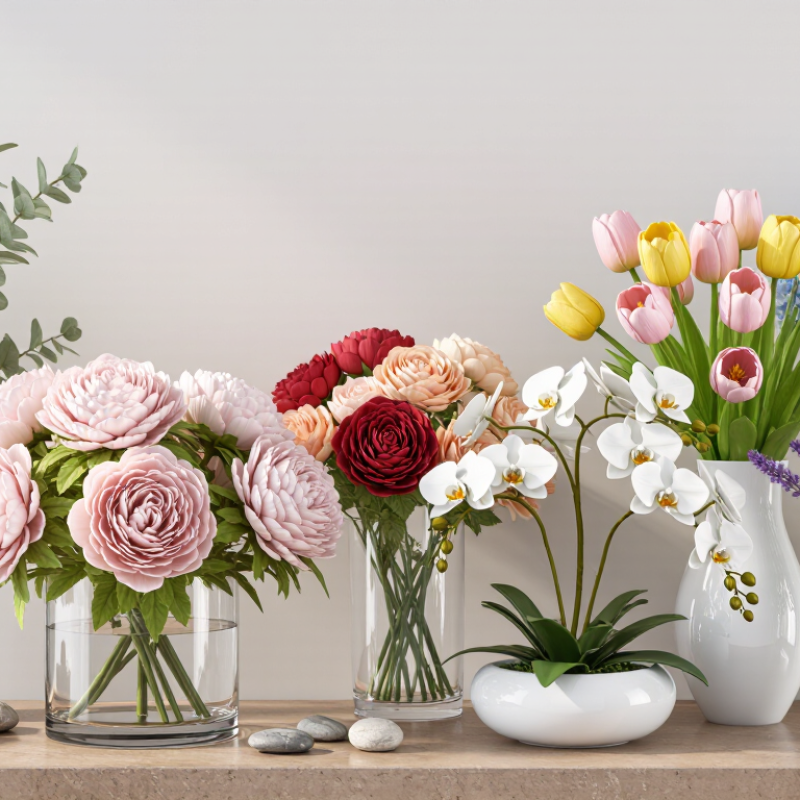
What Are the Top Fake Flowers in Vase for Global Buyers?

What Defines High-Quality Fake Flowers in a Vase?

High-quality fake flowers in a vase begin with believable visual details. Petals should show slight color variation, natural curves, and fine veins. Uniform petals often reveal low-cost manufacturing. A 2023 Grand View Research report estimated the global artificial flowers market at about US$1.6 billion in 2022, with steady growth expected through 2030. That trend reflects demand for durable decoration, not acceptance of plastic-looking products.

Material choice matters. Polyester or high-grade PE petals should feel flexible, while stems need enough firmness to hold their shape. A well-made vase arrangement should stand evenly without leaning. The vase should also have a stable base, smooth edges, and enough weight for shipping. IMARC’s 2024 market analysis described rising interest in maintenance-free decorative products, but market estimates vary by product definition. Buyers should check the research scope.

Look closely at the finish.

Color should remain consistent under indoor lighting. Strong chemical odors may suggest poor material control. Dust-resistant coatings can reduce cleaning time, although no coating stays perfect forever. In my buying experience, stem joints often fail before petals do. That detail deserves more supplier attention. Reliable sellers provide material specifications, care instructions, packaging tests, and clear product photographs. A small sample order still matters. It can expose loose petals, unstable bases, or unrealistic colors before a larger purchase.

Which Artificial Flower Types Are Most Popular Worldwide?

Across global markets, roses remain among the most requested artificial flowers for vases. Their familiar shape suits homes, hotels, offices, and event settings. Buyers often choose cream, white, blush, or deep red shades. Soft-touch petals and flexible stems improve the visual effect. However, overly perfect roses can look artificial under strong lighting.

Tulips are also popular, especially in northern Europe, North America, and modern Asian interiors. Their simple form fits narrow ceramic vases and small dining tables. Hydrangeas attract buyers who want fuller arrangements with fewer stems. Their broad flower heads create volume quickly. Orchids offer a more refined appearance, while cherry blossoms appeal to customers seeking seasonal decoration without fresh-flower maintenance. Eucalyptus and other leafy stems are frequently added for height and texture.

In wholesale inspections, I check whether stems bend naturally and whether petals recover after packing. Durable polyester or high-quality plastic usually performs better than brittle materials. Color consistency matters too. One faded leaf can weaken an entire arrangement. Still, no artificial flower looks fully natural from every angle. That limitation deserves honest attention. Buyers should also consider dust buildup, vase size, sunlight exposure, and cleaning methods. A beautiful sample may disappoint when its stems are too short or its colors clash with local interiors. Customer preferences differ widely, so popular flower types should guide purchasing decisions, not replace practical testing.

What Are the Top Fake Flowers in Vase for Global Buyers? - Which Artificial Flower Types Are Most Popular Worldwide? Indicative ranking based on widespread international use in home décor, weddings, hospitality, retail displays, and seasonal arrangements. Popularity levels are qualitative rather than an official market-share measurement.
Rank Artificial Flower Type Global Buyer Demand Most Common Vase Applications Common Artificial Materials Typical Stem Length Practical Care Profile Frequently Purchased Colors
1 Artificial Roses Very High Romantic home décor, wedding centerpieces, hospitality displays, gift arrangements, and everyday table vases. Polyester or silk-like fabric petals; PE or latex-touch petals for premium realistic models; wire-reinforced stems. 35–70 cm Long-lasting indoors; remove dust with a soft brush or cool air. Keep away from prolonged direct sunlight. Red, white, blush, pink, champagne, peach, and cream.
2 Artificial Hydrangeas Very High Large bouquet fillers, dining tables, wedding décor, hotel lobbies, and farmhouse or classic interiors. Fabric or molded foam flower heads with polyester leaves and flexible stems. 35–60 cm Large heads collect dust easily; gentle feather-dusting is recommended. Avoid crushing during storage. White, blue, dusty blue, green, lavender, blush, and burgundy.
3 Artificial Peonies Very High Bridal bouquets, romantic interiors, premium gift arrangements, bedroom décor, and seasonal spring displays. Layered polyester, silk-like fabric, or soft-touch PU petals with wire stems. 40–65 cm Best displayed indoors; protect the layered petals from moisture, compression, and strong ultraviolet exposure. Blush pink, white, coral, mauve, burgundy, and pale yellow.
4 Artificial Tulips High Minimalist vases, Scandinavian interiors, spring arrangements, kitchen counters, and office reception areas. Polyester, latex-touch, or molded PU petals; plastic or wire-reinforced stems. 30–50 cm Simple to maintain; wipe smooth leaves and petals with a dry or slightly damp cloth. White, yellow, pink, red, purple, orange, and mixed pastel shades.
5 Artificial Orchids High Contemporary homes, restaurants, spas, hotel rooms, reception desks, and narrow decorative vases. PU or silicone-touch petals, molded plastic stems, and synthetic roots or leaves. 45–90 cm Suitable for low-maintenance interiors; clean broad leaves carefully and keep the arrangement away from high heat. White, magenta, purple, yellow, pink, and white with contrasting centers.
6 Artificial Sunflowers High Country-style décor, summer displays, kitchens, cafés, seasonal events, and cheerful entryway arrangements. Polyester fabric petals, molded plastic centers, and reinforced synthetic stems. 45–80 cm Durable for indoor display; bright colors may fade when exposed to continuous direct sunlight. Golden yellow, orange-yellow, cream, brown, and green.
7 Artificial Lilies High Formal floral arrangements, memorial décor, hotel displays, dining rooms, and tall floor vases. Polyester or silk-like petals with plastic stamens and wire-supported stems. 50–90 cm Keep petals separated during storage; dust stamens and leaves gently to preserve their shape. White, pink, orange, yellow, cream, and burgundy.
8 Artificial Eucalyptus High Modern greenery arrangements, minimalist vases, wedding foliage, office décor, and mixed bouquets. Molded PE or PVC leaves with flexible plastic or wire stems. 40–90 cm Very low maintenance; wipe or rinse washable varieties and allow them to dry completely before storage. Sage green, silver green, blue green, and muted olive.
9 Artificial Baby’s Breath High Bouquet filler, wedding décor, small bud vases, gift wrapping, nursery décor, and lightweight arrangements. Polyester or foam blossoms attached to flexible plastic stems. 35–70 cm Lightweight clusters should be stored loosely; use cool air or a soft brush to remove dust. White, ivory, blush, pale blue, lavender, and soft pink.
10 Artificial Cherry Blossom Moderate to High Large statement vases, hospitality interiors, wedding arches, spring-themed displays, and festive décor. Fabric or molded foam blossoms on natural-looking wood or plastic branches. 80–180 cm Requires careful handling because branches can be bulky; reshape gently after transport and keep away from heat. White, pale pink, bright pink, and blush.

How Do Vase Materials and Flower Arrangements Affect Buyer Choice?

What Are the Top Fake Flowers in Vase for Global Buyers?

Vase material strongly influences how buyers judge artificial flowers. Clear glass gives roses, tulips, and eucalyptus a light, modern appearance. It also reveals stems, foam, and loose wiring, so construction must look realistic. Ceramic vases feel warmer and suit hydrangeas, peonies, and fuller arrangements. Their heavier weight reduces tipping during display or shipment. Metal vases create a sharper look, especially with orchids or narrow eucalyptus branches. However, metal can make soft flowers appear less natural. Resin offers practical durability, but poor finishing may look inexpensive.

Arrangement style changes buyer expectations across regions and spaces. Compact bouquets work well on office desks, reception counters, and small dining tables. Tall arrangements create stronger visual impact in hotels and spacious living rooms. Buyers often prefer neutral flower colors because they fit changing interior designs. Still, bright tulips and seasonal blossoms can attract attention in retail displays. I have found that realistic asymmetry feels more convincing than perfectly balanced stems. Nature is rarely exact.

My own buying trials were not flawless. Some vases looked attractive but felt unstable after arranging. A narrow opening also limited flower movement and made the bouquet appear crowded. Professional buyers should check vase weight, base width, stem flexibility, and color consistency. They should also test the arrangement under warm and cool lighting. Small details matter. A soft-touch finish, hidden support, and dust-resistant petals can improve long-term value. Yet no arrangement suits every buyer, room, or culture.

What Colors and Styles Suit Different Global Markets?

Artificial flowers in vases sell better when their colors and forms match local interiors.

In North America, soft eucalyptus, white hydrangeas, and muted beige arrangements suit open-plan homes. These shades feel calm beside wood, linen, and neutral furniture. European buyers often prefer realistic tulips, wildflowers, and slim ceramic vases. Dusty pink, olive green, and warm cream can support a simple, sustainable-looking style.

In the Middle East, fuller arrangements often attract attention. Deep red roses, ivory orchids, and rich gold-toned foliage create a luxurious visual effect. However, excessive shine may look inexpensive under strong lighting. In East Asian markets, compact cherry blossoms, orchids, and bamboo-inspired stems can fit smaller apartments. White, blush, and light green usually photograph well for online listings. Regional preferences are not fixed. Younger buyers may choose bright orange or cobalt blue despite traditional expectations.

Tips:

Test sample arrangements in real rooms before large production. Check vase height, stem density, and color under daylight. Use flame-resistant materials where buyers request them, and provide clear care instructions. Slight irregularities can improve realism, but poor leaf alignment remains noticeable. I have found that one perfect color rarely works globally. A flexible collection, with interchangeable stems and neutral vases, is more reliable. Keep product photos honest; overly polished images can create disappointing expectations.

How Can Buyers Evaluate Durability, Safety, and Maintenance Needs?

Artificial flowers in a vase are increasingly used in hotels, offices, homes, and retail displays. Grand View Research valued the global artificial flowers market at approximately USD 1.8 billion in 2023. For global buyers, appearance matters, but material performance matters more. A realistic petal is not necessarily a durable petal.

Buyers should request fabric composition, colorfastness results, and UV-aging test records. ISO 4892-3 testing can indicate how synthetic materials react to prolonged ultraviolet exposure. Ask whether the stems contain metal, plastic, or coated wire. Check for sharp edges, loose decorative parts, and strong chemical odors. Safety documents should address applicable chemical requirements, such as REACH substance restrictions in European markets. A test report is stronger evidence than a supplier’s verbal promise.

Maintenance needs are easy to underestimate. Dust collects inside dense petals and between layered leaves. A soft brush, low-pressure air, and a slightly damp cloth usually work better than soaking. Avoid placing arrangements beside sunny windows, heaters, or humidifiers. Industry market research also identifies hospitality and commercial interiors as important demand areas, where displays face frequent handling. That changes the buying decision. A delicate arrangement may look excellent during inspection but fail after repeated cleaning. I have found sample testing useful, although one sample cannot represent every production batch. Buyers should inspect several units, photograph color changes, and record stem flexibility before placing larger orders.

FAQS

What makes artificial flowers in a vase look realistic?

Look for curved petals, slight color variation, fine veins, and flexible stems. Perfectly identical petals often appear artificial. Nature is rarely exact.

Which materials usually perform well?

Polyester and high-grade PE petals should feel flexible. Stems need firmness without becoming rigid. Brittle materials may crack after packing.

Which artificial flowers are popular for vase arrangements?

Roses, tulips, hydrangeas, orchids, and cherry blossoms remain common choices. Eucalyptus adds height and texture. Preferences still vary by region.

How should buyers choose a suitable vase?

Glass creates a light, modern appearance but exposes weak construction. Ceramic adds weight and warmth. Check the base, edges, and stability carefully.

How does arrangement size affect purchasing decisions?

Compact bouquets suit desks and small dining tables. Tall arrangements work better in hotels or spacious rooms. A narrow opening may crowd stems.

What should buyers inspect before placing a large order?

Request a small sample first. Check loose petals, leaning stems, unstable bases, color consistency, and packaging damage. Samples can reveal disappointing details.

How can buyers judge color and finish?

View the arrangement under warm and cool indoor lighting. Colors should remain reasonably consistent. Dust-resistant coatings help, but none stays perfect forever.

What care do artificial flowers need?

Remove dust regularly with a soft cloth or gentle air. Avoid harsh cleaning methods. Even durable petals can lose their finish over time.

Are perfectly balanced arrangements better?

Not always. Slight asymmetry often looks more natural. My own trials were not flawless, and attractive vases sometimes became unstable after arranging.

Conclusion

Fake Flowers In Vase offer global buyers a practical way to add lasting beauty to homes, offices, hotels, and retail spaces. High-quality options are defined by realistic colors, natural-looking textures, secure stems, balanced proportions, and fade-resistant materials. Popular choices include artificial roses, tulips, lilies, hydrangeas, peonies, and seasonal mixed bouquets. Buyers often compare vase materials such as glass, ceramic, metal, and lightweight resin, considering how each affects appearance, stability, shipping, and overall use. Arrangement style also matters, from compact centerpieces to tall statement displays.

Color and design preferences vary by market. Soft neutrals and pastel tones may suit minimalist interiors, while vivid colors and abundant arrangements can appeal to buyers seeking a more decorative effect. To evaluate products, buyers should check material quality, color consistency, stem flexibility, vase stability, and resistance to dust and sunlight. Easy-clean surfaces, low maintenance, safe construction, and durable packaging further improve long-term value. By balancing visual appeal, practicality, and regional preferences, buyers can select arrangements that remain attractive and functional over time.

Henry

Henry

Henry is a dedicated marketing professional with a profound expertise in the company's offerings. With years of experience in the industry, he possesses an impressive understanding of the market dynamics and consumer behaviors that drive success. Henry is committed to sharing his insights through......